Noa Sinclair photo

Audio By Carbonatix
On a humid spring evening in Little Havana, guests trickled into El Jardín Inn carrying cocktails beneath strings of lights and swaying palms. The quaint neighborhood hotel, increasingly known for its cultural activations and intimate performances, felt less like a hospitality venture and more like an outdoor living room for Miami’s creative class.
That night belonged to Francia. As the Afro-Venezuelan artist took the stage to celebrate the release of his new EP, Negrito, there was an unmistakable feeling in the air that this was more than an album launch. It was a declaration. A reclamation. A love letter to Blackness in all its complexity.
For all of Miami’s diversity, its queer music scene remains one of the city’s most underappreciated cultural engines. Queer artists — particularly Black and Brown artists — have quietly reshaped Miami’s sonic identity from warehouse parties to intimate listening rooms.
If Pride Month is about visibility, these musicians are pushing beyond mere representation. They are building new worlds.
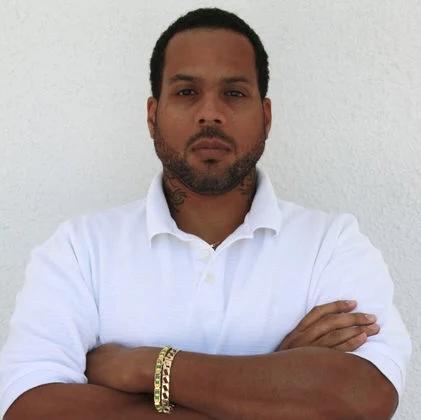
Francia
There is an elegance to Francia that feels intentional. Whether wrapped in tailored silhouettes or delivering silky vocals over Afro-Latin rhythms, Francia moves with the confidence of someone rewriting inherited narratives. “When I dress, it’s to seduce myself,” Francia says with a laugh. “I want to represent Latinidad elegantly.”
His latest EP, Negrito, does precisely that. “‘Negrito’ reclaims Black men and Black masculinity,” he explains. “As an Afro-Venezuelan, I needed songs that expanded my identity.”
The project arrives at a moment when conversations around race and representation within Latin music remain unresolved. Francia doesn’t shy away from the contradictions.
“There’s a myth via colonization that the Black man is lazy and doesn’t want to work, but Black people literally built the Americas through forced labor, as well as birthed whole civilizations.”
His music, from the swaggering “Elegancia la de Francia” to the sugarcane-sweet groove of “melaito e’ caña,” celebrates Black joy as an act of resistance. The song “Bendecido” radiates gratitude without ignoring hardship.
Francia also points to the persistent marginalization of Black artists in Latin music, noting how Afro-diasporic culture is often celebrated while Black performers remain sidelined. The critique is sharp, but Francia ultimately returns to joy.
“I’ve come to learn that you’re the owner of your own frequency. Joy can help combat homophobia, transphobia, and xenophobia. My music has that frequency of joy and belonging.”
Miami, he says, still has work to do. “I love Miami, but it’s segregated,” he says, noting how Black communities remain invisible in many of the city’s affluent spaces. And yet, he remains hopeful.
“I may sleep on my mom’s couch, but I’m the happiest I’ve ever been. Happier than working at a law firm in NYC, making over six figures, and flying business class. I’m in Miami helping put Afro-centric music at the forefront.”
Mikah Amani
If Tracy Chapman and Meshell Ndegeocello had a child, with Toshi Reagon as the wise auntie in the corner, the result might sound something like Mikah Amani.
The Black trans artist creates folk music that feels both intimate and expansive, songs that unfold like handwritten letters left on a bedside table. Tracks such as “I Know a Drummer” pulse with quiet revelation, while “Fig, I Want It All” drifts between yearning and self-discovery like a late-night confession whispered to no one in particular.
His forthcoming EP, Now That You Have My Heart, promises to continue that emotional excavation. “Before, I wasn’t able to tap into all of my authenticity until I came out as trans,” Amani says.
“Trans people want to feel human and be humanized in the process. “Yes, trans individuals are being killed at an alarming rate, but I want the world to focus on our totality as moving and contributing spirits of this world. You can’t be spiritual and treat other human beings as non-spiritual beings.”
“Being around the community protects my peace; it’s where I mostly feel at home.” Amani resists the expectation that queer artists must constantly perform struggle.
“I don’t want to always talk about the struggle.” Then he smiles. “I’m known as Miami’s favorite sad boy.”
In a city more often associated with dance music and excess, Amani has quietly helped cultivate a burgeoning folk scene. “Miami has challenged me to create a folk scene,” he says. “It’s evolving.”
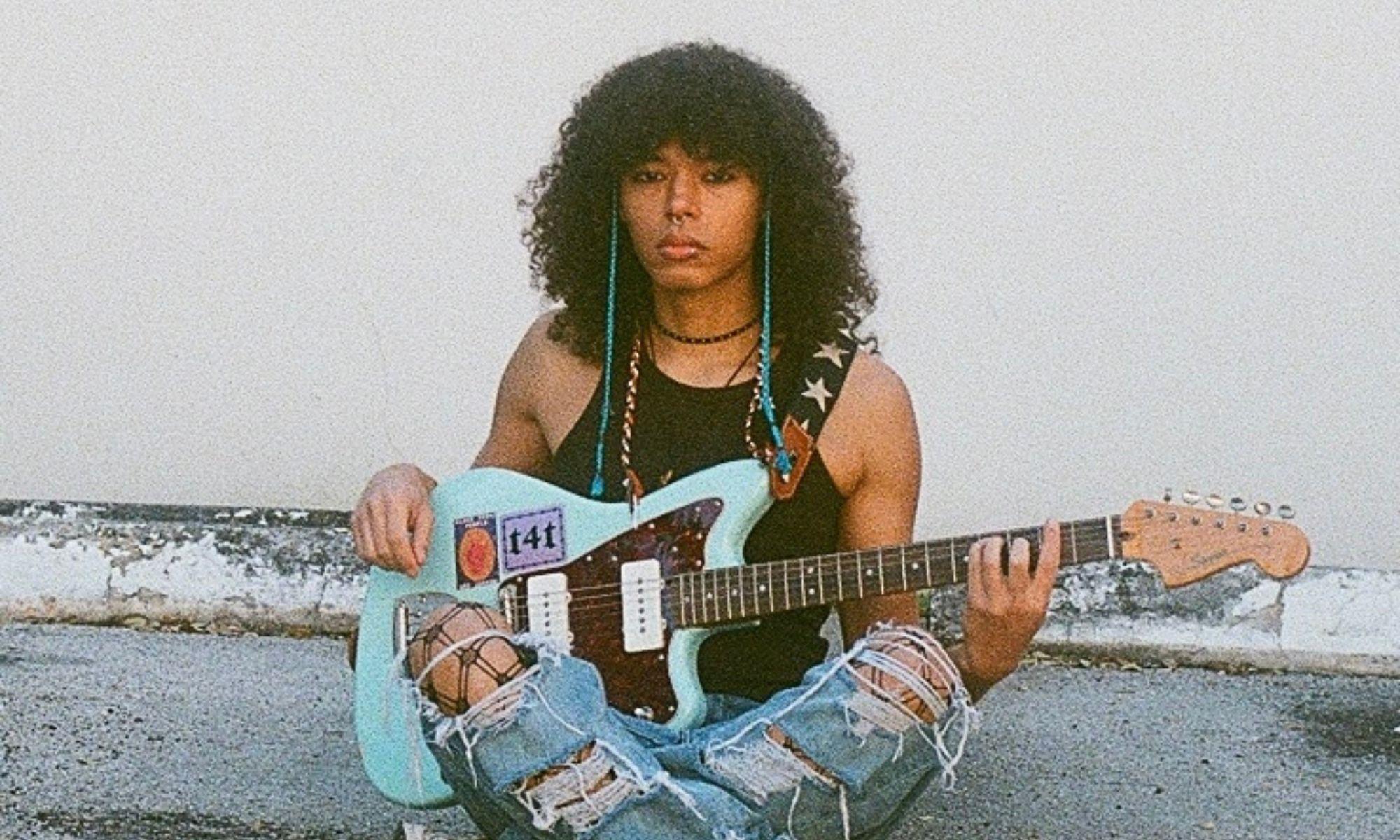
Noa Sinclair
The first time many Miamians encountered Noa Sinclair may have been at Queerfest, on the airwaves of Miami Community Radio, or perhaps unexpectedly in a Karol G music video.
Grounded in intersectional care and underground spaces, the Afro-Peruvian artist creates music that exists between bedroom confessionals and late-night existential spirals. Their songs carry alt-pop instincts softened by vulnerability and introspection.
Raised on the music of Afro-Peruvian icon Susana Baca, Sinclair carries heritage into every performance.
“Dancing on the floor like no one’s watching is both freedom and vulnerability,” they say.
Their forthcoming EP, Youth Legacy, arriving this fall, continues an artistic practice rooted in self-discovery. The lead single, “Elementary,” hints at an artist increasingly comfortable with ambiguity.
Outside music, they work with autism and neurodivergent communities, bringing that same ethos of care into their art.
For Sinclair, Miami’s relative youth as a cultural city remains an advantage. “Miami is a new city; it isn’t New York or LA, cities that are already established.”
That openness has fostered an unusually collaborative scene. “In this close-knit community, friends continuously show up for one another. Other artists promote each other.” And increasingly, Sinclair is interested in a subject that runs through so many of these conversations. Joy. “I want to write more about joy.”
In a moment when difference is often treated as division, Sinclair offers another possibility. “I hope people realize that differences are actually something we can benefit from and learn from each other.”
For Miami’s queer artists, perhaps that is the future they’re building: one where joy is not escapism, but survival.
Dizzy Smarp
If Miami’s queer music scene has taught us anything, it’s that genres once considered rigid are now gloriously porous. Enter Dizzy Smarp.
Reggaetón has long wrestled with machismo and rigid ideas of masculinity. Dizzy Smarp bends the genre into something stranger, queerer, and more playful. Their EP PaPi ChUlOo pulses with flirtation, camp, and dance-floor catharsis.In doing so, they join a growing wave of queer Latin artists reclaiming space within one of the world’s most influential genres.
Breezy of Coco & Breezy
In a city known for transplants and reinvention, staying put can be its own act of devotion. Breezy, one half of the magnetic sister duo Coco & Breezy, understands this intimately.
Though Coco recently relocated to Los Angeles, Breezy remains rooted in Miami. Even as international DJ sets and global festivals pull her across continents, the Magic City remains home base — a place whose Caribbean rhythms, late-night energy, and multicultural spirit continue to inform her work.
Tracks like “Just Say,” “Manifest,” “I Am Free,” “Off My Mind,” and “Change Your Mind” blend soulful grooves with affirmations of self-determination and liberation.
That ethos feels especially resonant during Pride Month. In a city constantly reinventing itself, Breezy proves that dance music can be more than escapism—it can be healing.
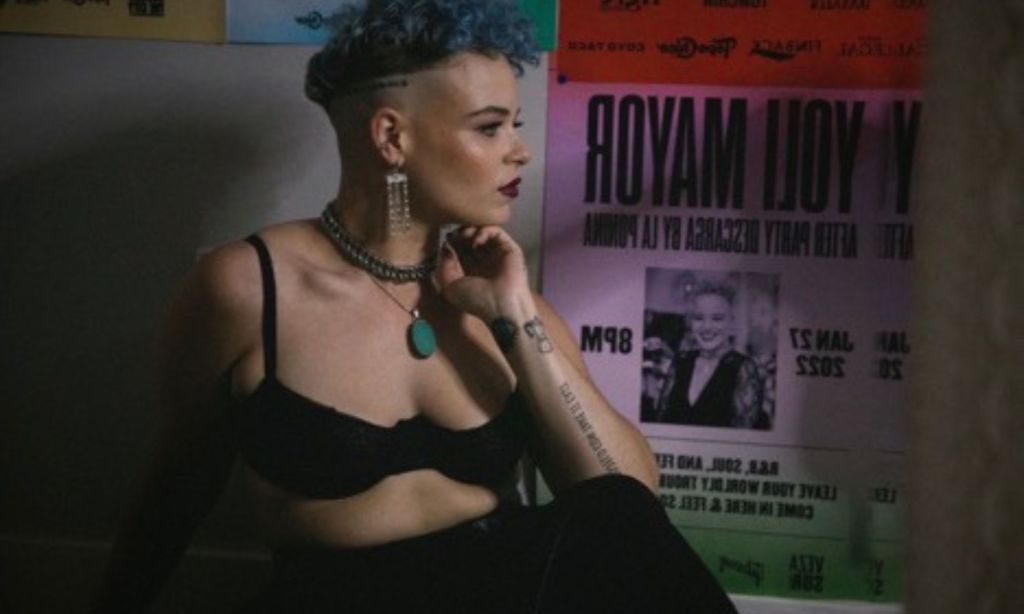
Yoli Major photo.
Yoli Mayor
Long before many audiences knew her name from America’s Got Talent, Yoli Mayor was simply a kid growing up between Little Havana and the Miami River.
“Fishing off the bridges is my Miami,” she admits in conversation with New Times. That detail feels telling. Yoli’s music has always been rooted in place — equal parts vulnerability and grit. Songs like “Play Acting,” “Breathe,” and “No Good for Me” reveal an artist unafraid of emotional complexity.
But lately, her songwriting has shifted. “For so long, I’ve been writing songs about women as my subject or love interests,” she says. “Now I’m giving myself permission to write about the men in my life.”
The change may seem subtle, but for many queer artists raised in conservative spaces, language itself can become a site of liberation. “I take queerness very seriously,” Mayor says. “To me it means operating without shame.”
This summer, she’s serving as a counselor at a Massachusetts camp for marginalized queer children and young adults, helping create the kinds of affirming spaces many wish they had growing up. “Latinos don’t talk about queerness enough,” she says.
Visibility, however, remains complicated. “Visibility is scary. I try not to let it inform my life. Visibility isn’t the reason why I create.”
Instead, she focuses on something quieter. “I’m learning how to honor my experiences and be loving and accepting of myself.”
In a culture that often rewards certainty, Yoli Mayor offers something rarer: permission to evolve.
Robbie Elias
Two-time Grammy winner Robbie Elias has worked with everyone from Gloria Estefan and Ricky Martin to Daddy Yankee. But in recent years, the Miami-based singer, songwriter, and producer has become one of the creative forces behind contemporary drag music, shaping the sound of stars including Morphine Love Dion and Xunami Muse.
This Pride Month, Elias releases a studio cover of Cher’s “Believe” with Adriana de Moura while continuing his long-running Tribute to Pop residency at Faena Miami Beach. In a city obsessed with what’s next, Elias reminds us of the power of longevity.